

Ingrown Toenails: Small Problem, Big Pain (and Big Costs)
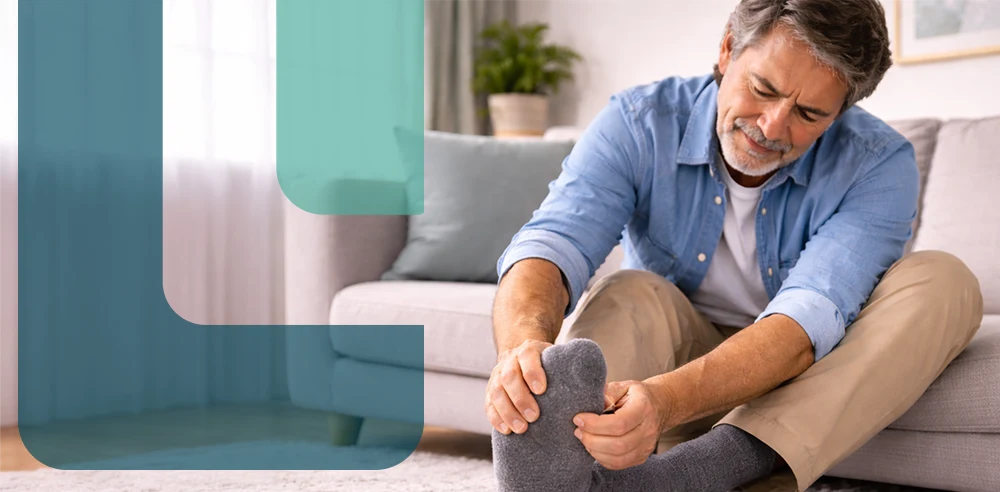
Ingrown toenails happen when the edge of a toenail grows into the skin beside it. The skin gets sore, red, and swollen. Sometimes it can get infected. Most ingrown toenails show up on the big toe, but any toe can be affected.
Even though this sounds like a “small” issue, it can limit what you can do each day. The pain can keep you from going to work, school, or doing normal daily activities.
Why ingrown toenails can become expensive
Costs of ingrown toenails for people and families
When your toe hurts, you may need a doctor visit that requires antibiotics or an in-office procedure which may cost you money. If you can’t work comfortably, you may need time off to heal and that can affect your budget, too.
There’s also an important link between ingrown toenails and income: a large U.S. study using the NIH “All of Us” database found that people in lower-income households were more likely to have an onychocryptosis (the medical name for ingrown toenails) diagnosis. In other words, this problem can hit harder in communities where money is already tight.
Costs for the healthcare system
Many nail problems can be treated in a clinic, but some people end up in the emergency department (ED). A U.S. study looking at emergency department care found an estimated 1.54 million ED visits for nail diseases from 2009–2018.
ED care is expensive. A national AHRQ report found the average cost per treat-and-release ED visit was about $750 in 2021 and higher for older adults.
What that means: When nail problems (including painful, infected toes) lead to ED visits, costs add up fast for patients and healthcare insurers.
Who is at higher risk: Seniors and people with diabetes
Senior citizens
As we age, nails often become thicker and harder to trim. Balance issues can make it tough to reach your feet safely.
Some seniors also have poor circulation, arthritis, or vision changes, which can turn a simple nail problem into a bigger one.
ED visit costs also trend higher in older age groups, which is one more reason to treat foot problems early.

People with diabetes
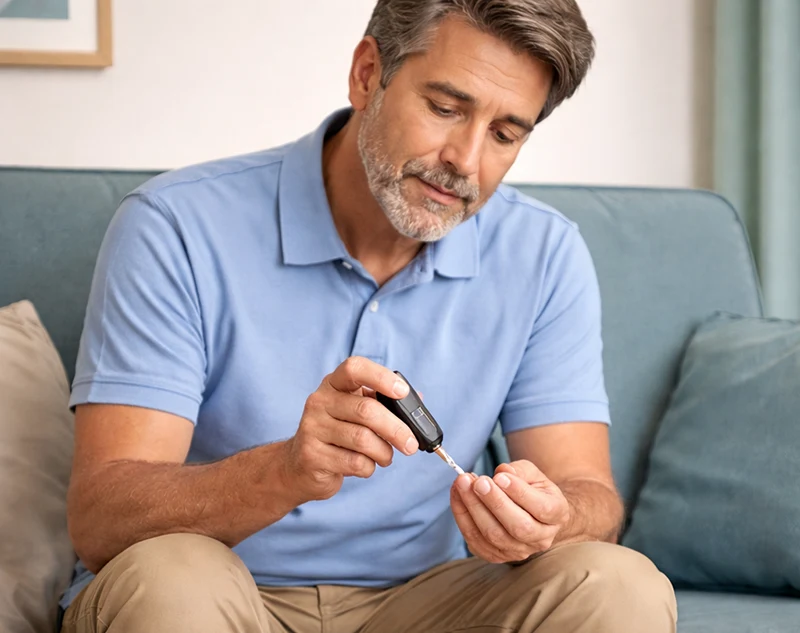
Diabetes can reduce blood flow and cause nerve damage (neuropathy). That means:
- You may not feel pain as early.
- Small skin breaks can heal more slowly.
- Infections can become serious faster.
If you have diabetes and think you have an ingrown toenail, get your foot checked by an Upperline Health clinician rather than trying to manage the situation at home.
The 7 most common triggers that cause ingrown toenails
Here are the most common reasons we see ingrown toenails develop:
- Tight shoes or narrow toe boxes. They squeeze the nail into the skin.
- Improper trimming. People cut their toenails too short or round the corners.
- Genetics and family history. Some people inherit a natural nail shape that curves more.
- Injury to the toe. Stubbing your toe or dropping something on it can cause an ingrown toenail.
- Repetitive pressure. Wearing the same shoes as work boots, soccer cleats, or running shoes for an extended period of time causes ingrown toenails.
- Nail shape or growth pattern. Very curved nails, thick nails, or nails that fan into the skin can be a trigger.
- Sweaty feet or skin irritation. A nail edge can break into soft or damp skin easily.
What Upperline Podiatric Physicians recommend to help prevent ingrown toenails
At Upperline, our podiatric physicians focus on simple habits that lower pressure on the nail and protect the skin:
Tip #1
Trim nails the “straight-across” way
- Cut the nail straight across, not rounded like a smile.
- Don’t cut the nail too short. Leave the toenail about even with the tip of the toe.
- Smooth sharp corners with a file instead of digging them out.
Tip #2
Choose shoes that give your toes room
- Look for a wide toe box that has more space across the front of the shoe.
- If you wear athletic shoes or cleats, make sure your toes aren’t jammed forward.
- Replace worn-out shoes that push the foot forward.
Tip #3
Protect your toes from repeat trauma
- If you play sports, ease into new footwear.
- Keep toenails trimmed properly before long runs, hikes, or tournaments.
- Consider protective toe gear if your sport or job causes frequent toe pressure.
Tip #4
Keep feet clean and dry
- Wash daily, dry well between toes, and change socks if they get sweaty.
- Moist, irritated skin can break down more easily.
Tip #5
Don’t dig, cut, or rip the nail edge
This often makes the skin more inflamed and raises infection risk.
Tip #6
Get regular foot and nail care if you’re high risk
If you’re a senior and can’t safely trim nails, or have diabetes and poor circulation, routine podiatry visits can prevent small problems from turning into big ones.
When an ingrown toenail needs medical care
Call or schedule an appointment with an Upperline foot specialist if you notice:
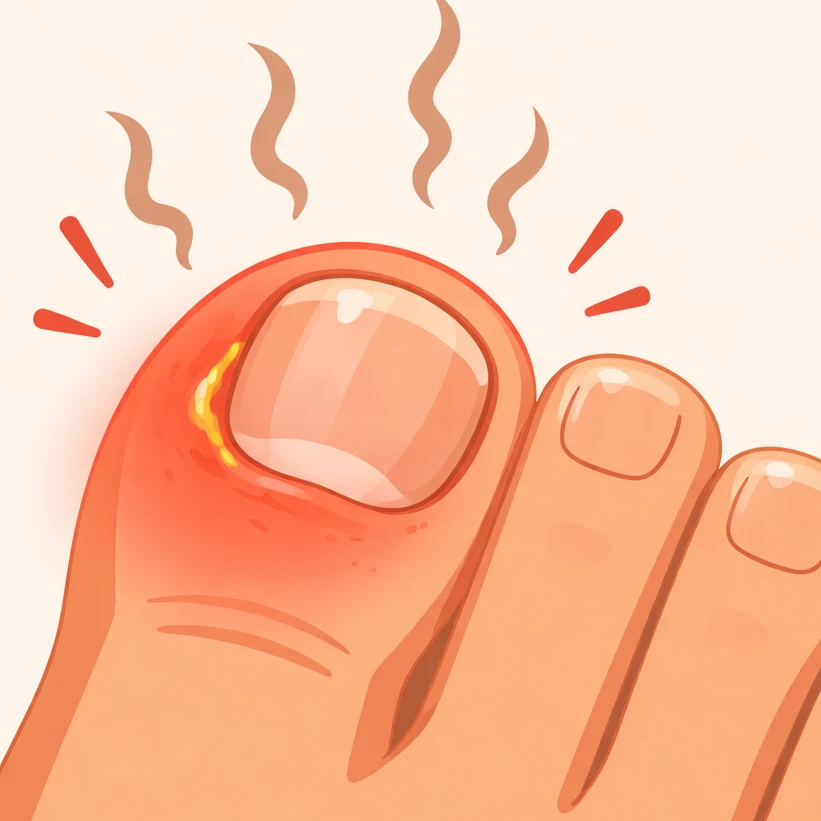
Increasing redness, swelling, warmth, or throbbing pain around the toe
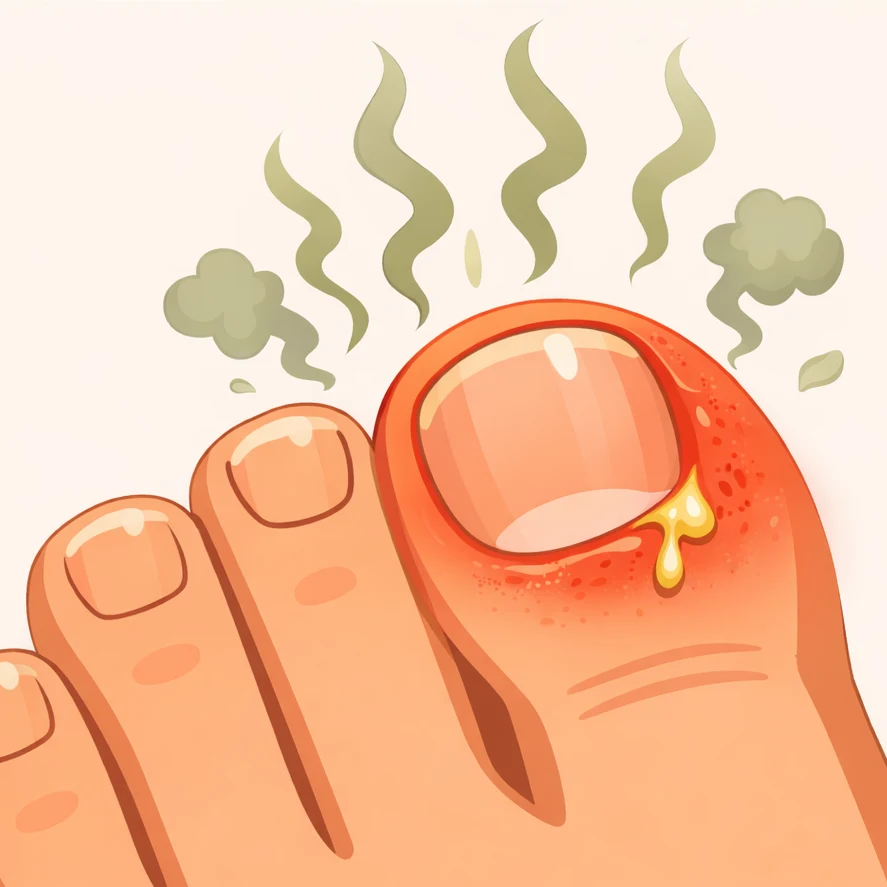
Drainage (pus) or a bad smell coming out of the infected area

Fever or chills, which may indicate the infection is spreading
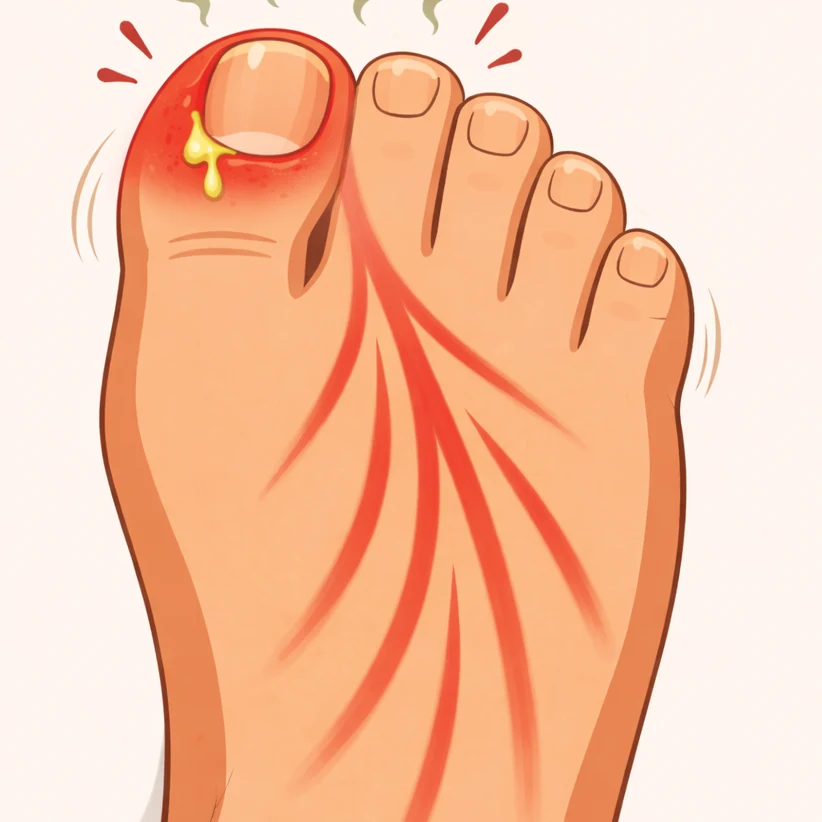
Red streaks moving up the foot
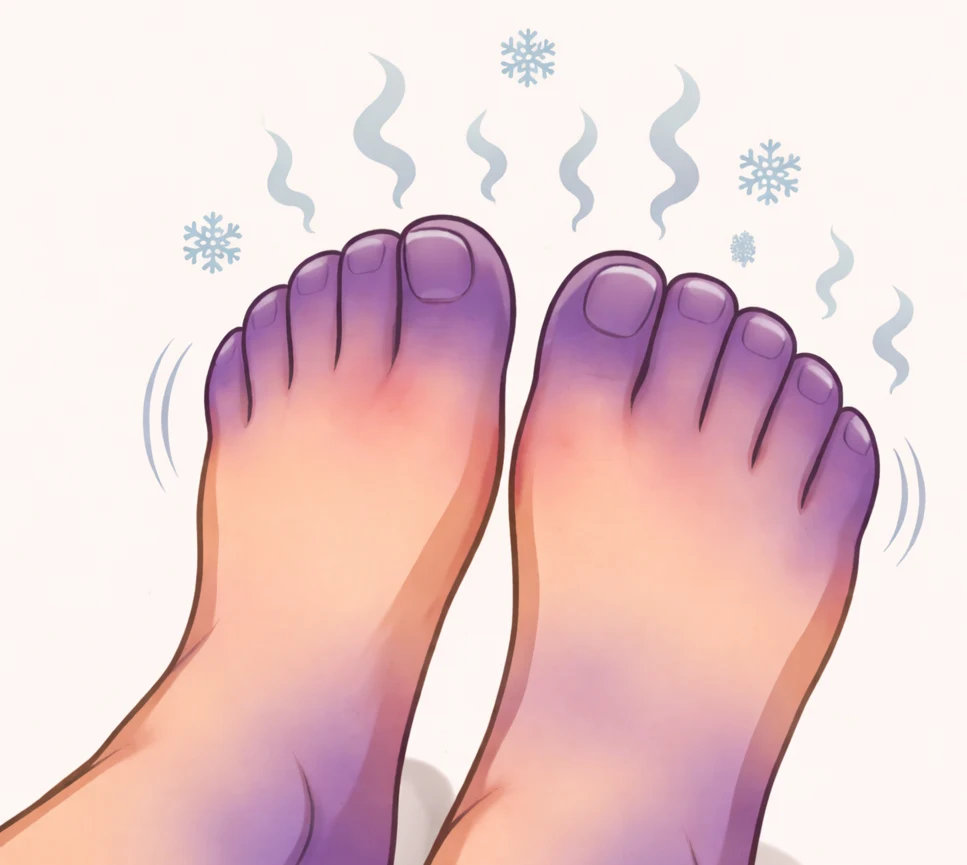
You have diabetes, numbness, or poor circulation
Our podiatric physicians can relieve pressure safely and quickly. For repeat cases, we may remove a small portion of the nail and treat the nail root so that edge doesn’t grow back the same way.
A smart next step: Get your toe(s) checked soon
If you’ve had toe pain, redness, or a nail edge that keeps digging in, don’t wait for it to become infected. Ingrown toenails can limit your life, cost money, and create bigger health risks, especially for seniors and people with diabetes.
Call or schedule an appointment online to schedule a podiatry check-up today. A quick visit to an Upperline clinic can help you get relief from your ingrown toenail and get you moving comfortably soon.
About the Author

Dr. Watson is a graduate of the University of Florida, in Gainesville, Florida, where he received his Masters in Public Health degree with a concentration in Epidemiology.
He attended Kent State University, in Independence Ohio, where he obtained his Doctor of Podiatric Medicine (DPM) Degree. He completed a three-year Podiatric Medicine & Reconstructive Rearfoot and Ankle Residency (PMSR-RRA) at Palmetto General Hospital in Hialeah, Florida, where he served as chief resident. His residency training included rearfoot and ankle reconstructive surgery, nerve surgery, foot and ankle trauma, charcot reconstruction and diabetic limb salvage.
During his residency he completed numerous additional surgical training courses with an emphasis on adult and pediatric reconstructive surgery, external fixation, ankle arthroscopy, lower extremity trauma and diabetic limb salvage.
Dr. Watson is dual board certified by the American Board of Podiatric Medicine; as well as, certified in Foot surgery by the American Board of Foot and Ankle Surgery.
In his spare time, Dr. Watson enjoys biking, diving and spending time at the beach.
Dr. Watson is available for appointments at the following locations:
Upperline Health – Port Orange
790 Dunlawton Avenue
Suite C
Port Orange, Florida 32127
Upperline Health – Orange City
975 Town Center Drive
Suite 200
Orange City, Florida 32763
Latest Posts
- Beyond the Exam Room: Whole-Person Care and the Heart Behind Upperline Plus Social Work
by Upperline Health - “At-Risk Foot Care?” A Frequently Asked for Service
by Dr. Mark Davids - Circulatory Disease: Why Your Feet May Be the First Place You Notice It
by Sohail Siddiqui, DPM, FACFAS
Top Blog Topics
- Podiatry (40)
- Conditions (32)
- Provider Advice (31)
- Healthy Habits (17)
- Surgery (9)
- Injuries (7)
- Provider Spotlight (7)
- Surgical Alternatives (7)
- Company News (6)
- Sports Medicine (5)
- Pediatrics (4)
- Elder Advice (3)
- Vein Conditions (3)
- Running (2)
- Upperline Plus (2)
- American Podiatric Medical Association (1)
- Nurse Support (1)
- Social Work (1)
- Wound Care (1)
Blog Archives